Sri Lanka’s long coastline stretches nearly 1,600 kilometres, offering surfers a variety of waves shaped by different seasonal swells. The island’s location just south of India in the warm Indian Ocean means you can find surf almost any time of year, but the best spots depend on which coast you visit and when.
Quick Travel Summary
Sri Lanka offers year-round surfing with distinct seasons on its east and southwest coasts. Visitors should plan east coast trips from May to October and southwest coast visits from November to April for the best waves. Key surf spots include Arugam Bay and Hikkaduwa, each with unique conditions and crowd levels.
Surfing Seasons: East Coast vs Southwest Coast
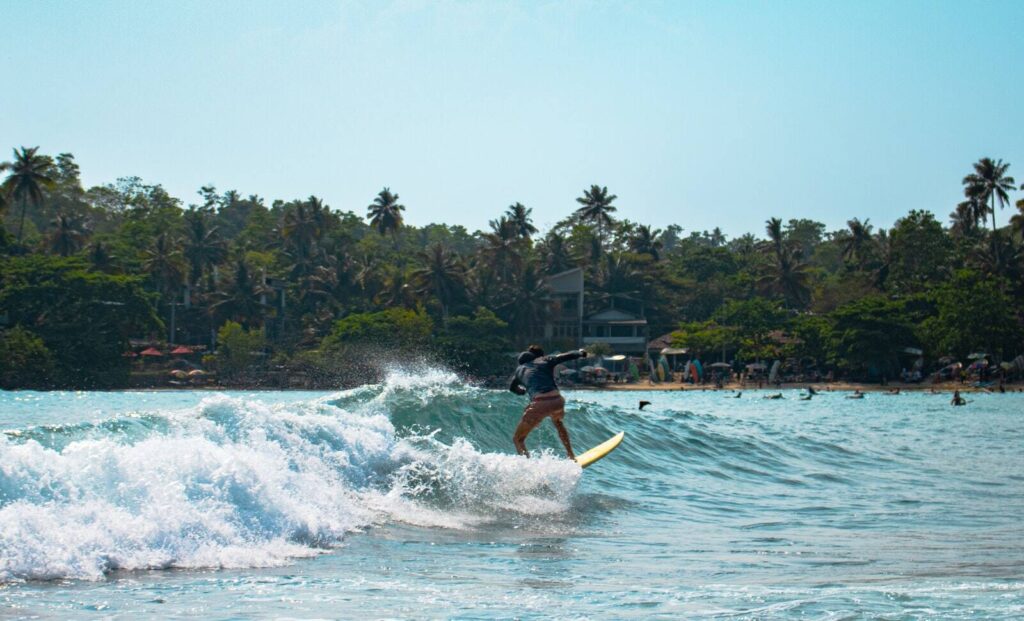
The country’s surf calendar is split into two main seasons due to monsoon winds. From November through April, the southwest coast is the prime destination, with places like Hikkaduwa drawing surfers to consistent reef breaks. During this time, the east coast tends to be quieter and less reliable for waves.
Then from May to October, the monsoon shifts, and the east coast takes over as the hotspot, with Arugam Bay becoming the centre for surfers chasing long right-hand point breaks and barrels. This seasonal switch means you can plan a surf trip almost any month, just by choosing the right coast.
East Coast Surf Highlights
Arugam Bay is the standout spot on the east coast. It features a long right-hand sandbottom point break that works best at around 3 to 4 feet, but can handle bigger swells up to 6 to 8 feet, although the wave tends to break in sections once it gets too big. This spot is known for its consistency, offering surfable waves on most days during the season. Crowds can build up, especially during peak times, but the waves are friendly for beginner to intermediate surfers.
About an hour south of Arugam Bay by road is Okanda, a more sheltered wave with a hollow inside section. It picks up as much swell but is less affected by the daily south-southeast trade winds that usually start mid-morning. Okanda is a bit trickier to paddle out to due to a whale-shaped rock shelf, but it rewards surfers with more performance-oriented waves and less crowding.
Further along the east coast, there’s a hollow and playful point break near Spectators Rock. It only breaks when Arugam Bay is at its peak swell, and the takeoff is close to some sharp rocks, so caution is needed. The wave offers a mix of bowl sections and longer rides along the point.
Southwest Coast Surfing
The southwest coast features exposed reef breaks that are consistent but tend to be calmer during the summer months. Offshore winds usually come from the east-northeast, while the best swells arrive from the southwest. This coast offers both left and right reef breaks, some of which are better suited for experienced surfers due to their power and coral hazards.
Hikkaduwa remains the main surf hub during the November to April season, with waves working well at all tide stages. The area can get crowded when conditions are good, so be prepared for company in the water.
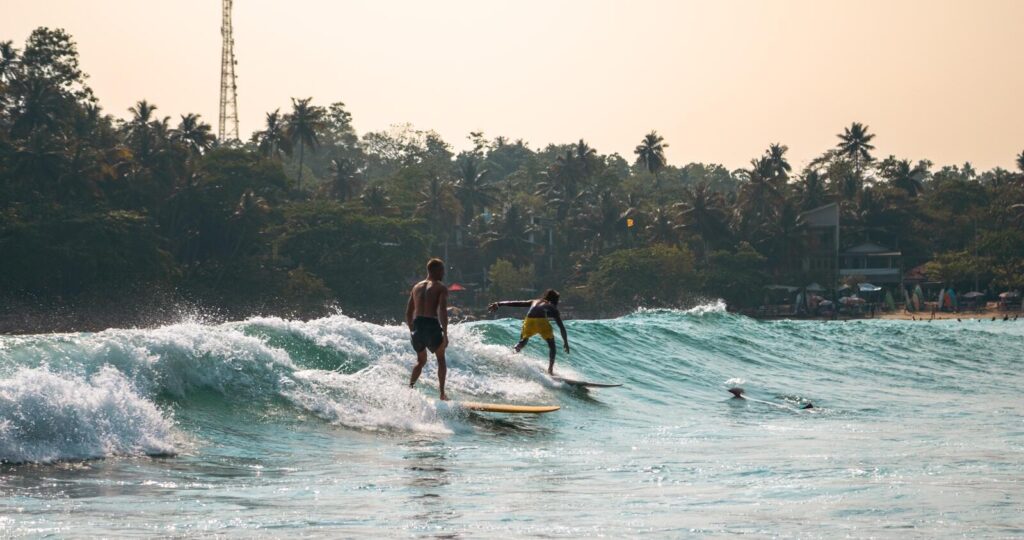
Other spots like Unawatuna Bay, near Galle, offer powerful right-hand reef breaks for skilled surfers, while closer to the beach you’ll find more forgiving beach breaks that are better for beginners and intermediates.
Beyond the Surf: Exploring Sri Lanka
For those who want a break from the waves, Sri Lanka has plenty to offer. Whale and dolphin watching tours operate from several coastal towns, providing chances to see marine life up close. Inland, national parks like Yala are famous for leopard sightings and elephant herds, with diverse birdlife adding to the wildlife experience.
Hiking enthusiasts can take on trails like Adam’s Peak, standing at 2,243 metres, or wander through tea plantations in the central highlands. Cultural sites in cities such as Colombo, Kandy, Galle, and Kataragama offer glimpses into Sri Lanka’s layered history and traditions.
Planning Your Surf Trip
Most international visitors arrive through Colombo-Bandaranayake International Airport, which has direct flights from Europe, Australia, and Asia. English is widely spoken in tourist areas, making navigation easier.
When choosing where and when to surf, keep the monsoon seasons in mind to match your skill level with the right waves and weather conditions. Both coasts have friendly locals and a relaxed vibe, but surf crowds can vary significantly depending on the spot and timing.
Remember to respect local surf etiquette, watch for coral hazards on reef breaks, and check the daily wind and swell forecasts to make the most of your sessions.
What tourists should know
Sri Lanka’s surf conditions vary by coast and season: the southwest coast is best from November to April, while the east coast excels from May to October. Arugam Bay on the east is popular and consistent, but can get crowded. Southwest spots like Hikkaduwa offer reef breaks suited to experienced surfers. Visitors should plan accordingly and check local surf reports.
Travel tip
Check the local wind and swell forecasts daily to pick the best time and spot for your surf session.